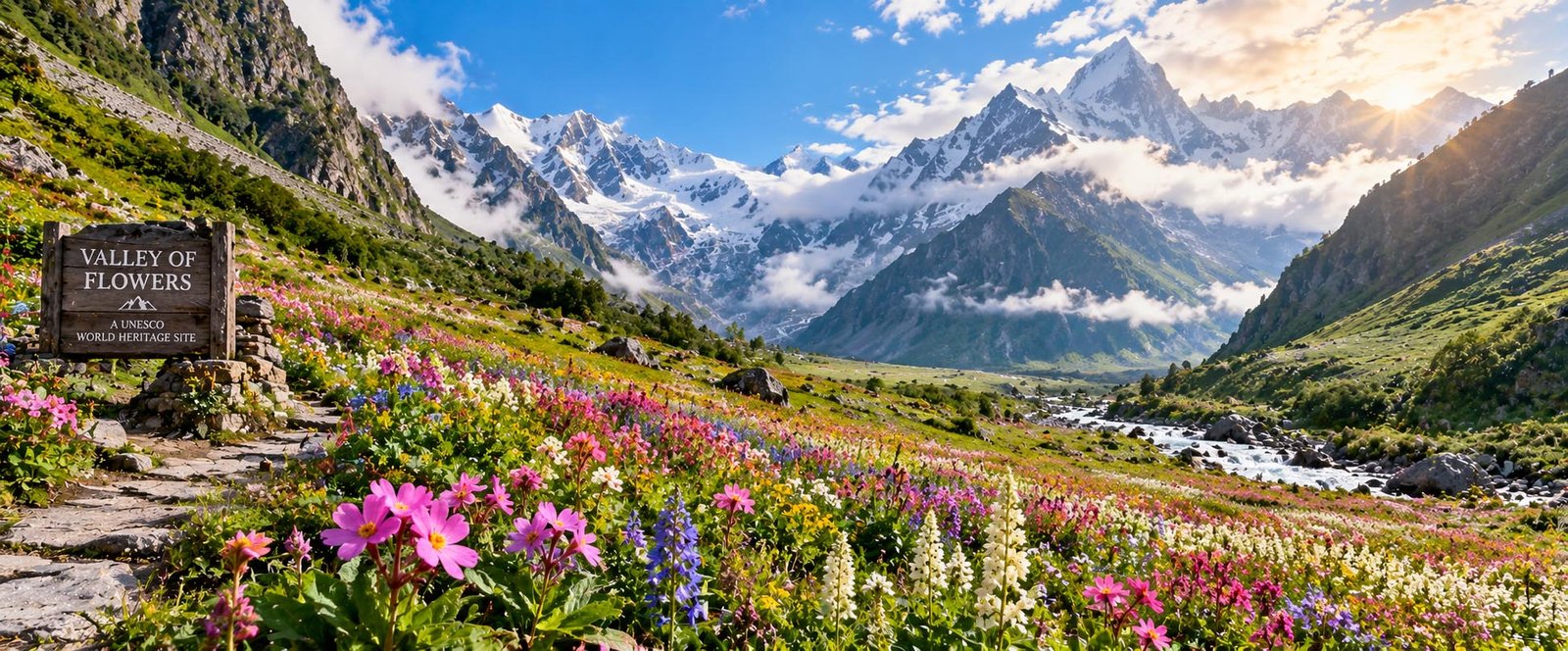
Colourful alpine flowers beneath the Himalayan peaks in the Valley of Flowers
Stories from Chamoli · Nature & Wildlife

Valley of Flowers: A Paradise on Earth

Step into a world of alpine blooms, flowing mountain streams and extraordinary Himalayan landscapes in one of Uttarakhand's most treasured natural sanctuaries.

Discover the Valley
Valley of Flowers Chamoli, Uttarakhand
A Himalayan Natural Wonder

Where the mountains bloom. Where nature tells its own story.

Hidden in the Garhwal Himalayas of Chamoli district, the Valley of Flowers is a high-altitude landscape celebrated for its extraordinary wildflowers, dramatic mountain scenery and remarkable biodiversity.

During its flowering season, the valley becomes a changing tapestry of colours. Delicate blossoms emerge among green meadows, rocky slopes and streams fed by the surrounding mountains. Every bend in the trail offers a different view of this protected Himalayan landscape.

The Valley of Flowers forms part of the UNESCO World Heritage property shared with Nanda Devi National Park. Its importance goes far beyond scenic beauty: the area protects a rich variety of alpine plants and provides habitat for Himalayan wildlife.

Here, nature is not arranged for a visitor's convenience. The flowers bloom according to the season, clouds move across the peaks, and streams shape the valley. Experiencing it means slowing down and appreciating the landscape as it is.

Alpine meadow, wildflowers and Himalayan scenery inside the Valley of Flowers
01 / Nature in Full Bloom

A living landscape where every season brings a different expression of colour.

A Landscape with a Story

More than a meadow of flowers

The Valley of Flowers brings together natural beauty, scientific importance and a powerful sense of discovery.

01

A discovery that captured the world's imagination

In 1931, mountaineer Frank S. Smythe and fellow British climbers came upon the valley after returning from an expedition in the region. Its remarkable floral display inspired the name by which the landscape became widely known. Smythe later helped introduce its beauty to a wider audience.

02

A remarkable variety of alpine plants

The valley is known for its diverse high-altitude flora, including primulas, poppies, daisies and other seasonal wildflowers. The species visible to visitors change with elevation, weather and the progress of the flowering season.

03

A protected Himalayan ecosystem

The Valley of Flowers is part of a UNESCO World Heritage property and the wider Nanda Devi Biosphere Reserve. Its meadows, streams, slopes and surrounding habitats are ecologically sensitive, making conservation essential to its future.

The Journey

The path is part of the experience.

Reaching the Valley of Flowers is a journey into the high Himalayas. The road journey leads to Govindghat, from where visitors continue towards Ghangaria, the principal base for the trek.

From Ghangaria, the trail enters the protected valley. The walk passes through mountain scenery and follows a route where conditions can change with rain, cloud and the state of the trail. Suitable footwear, reasonable fitness and preparation for changing weather are essential.

Plan enough time to enjoy the journey without rushing. Visitors must follow park entry timings, local instructions and current access rules. Overnight stays inside the Valley of Flowers are not permitted; travellers return to Ghangaria after their visit.

In the Himalayas, the journey is not simply a way to reach a destination. It is part of what makes the destination unforgettable.
The alpine landscape and flower-filled meadows of the Valley of Flowers The High Himalayan Trail
Follow the Seasons

When does the valley come alive?

The landscape changes throughout the accessible season. Flowering depends on local weather, altitude and conditions in a particular year.

01

Early season — the landscape awakens

As seasonal access begins, the valley gradually emerges from its winter conditions. Flowering varies, and some sections may look greener rather than being covered in abundant blooms.

02

Mid-season — a rich display of wildflowers

July and August often bring an especially vivid floral display, although the timing and abundance of blooms depend on the season. Monsoon weather can also mean rain, slippery paths and reduced visibility.

03

Late season — a quieter mountain mood

As the season advances, the floral display changes and the landscape takes on a different character. Check official park dates before planning a visit, since access is seasonal and may change with conditions.

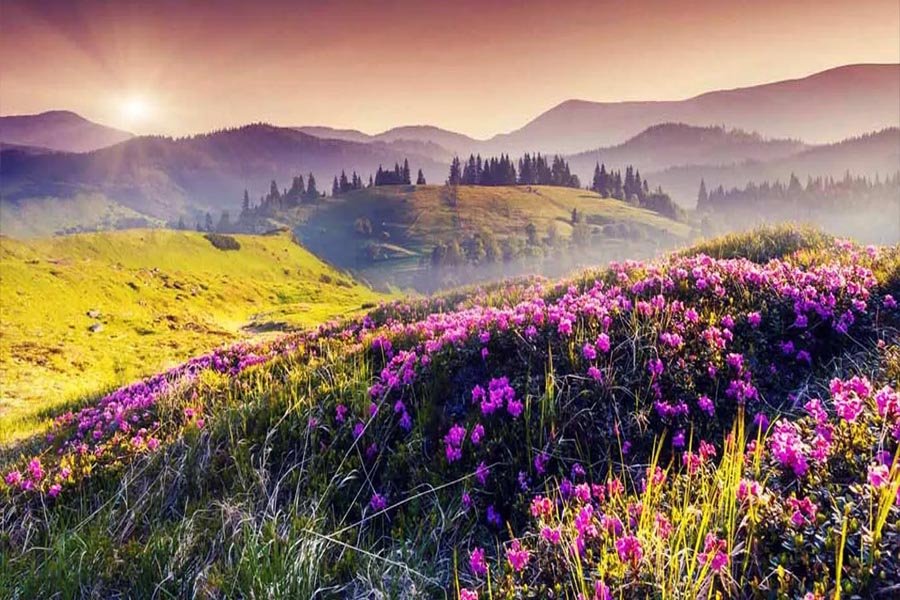
The colourful alpine landscape of the Valley of Flowers
A Fragile Natural Heritage

Beauty worth protecting.

The flowers that make this valley extraordinary are part of a delicate ecosystem. Picking plants, stepping off designated paths and leaving waste behind can damage habitats that take a long time to recover.

Visitors can help protect the valley by staying on marked trails, carrying waste back, respecting park rules and observing wildlife from a distance. Photography is best enjoyed without disturbing the landscape.

Responsible travel allows the valley's natural heritage to be appreciated while helping preserve it for future generations.

Before You Visit

Prepare well. Walk gently.

This is a high-altitude trek in a protected mountain environment. Make your plans around current official guidance rather than relying only on photographs or older travel reports.

  • Confirm opening dates, entry requirements and timings before travelling.
  • Check the weather and current trail conditions.
  • Wear suitable walking shoes and rain protection.
  • Carry water, food for the trek and personal essentials.
  • Return to Ghangaria within the required park timings.
  • Never pick flowers, litter or leave designated paths.
The Valley of Flowers beneath the Himalayan mountains
Stories from Chamoli

Some places remind us how extraordinary the natural world can be.

The Valley of Flowers is more than a beautiful destination. It is a living Himalayan landscape whose colours, biodiversity and quiet grandeur invite us to explore with wonder—and leave with respect.

Valley of Flowers Chamoli Uttarakhand